
Ethereum: Can someone explain how the Bitcoin Blockchain works?
Understanding the Ethereum Blockchain: A Beginner’s Guide
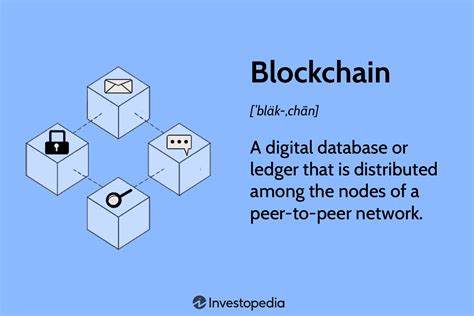
As you explore the world of cryptocurrencies, it’s essential to understand the underlying technology behind them. In this article, we’ll dive into the basics of the Ethereum blockchain, making it easier for you to navigate and understand how it works.
What is a Blockchain?
A blockchain is a decentralized digital ledger that records transactions on a network of computers. It is the backbone of cryptocurrencies like Bitcoin, Ethereum, and others. Each block in the chain contains a record of transactions, ensuring data integrity and security.
How Does Blockchain Work?
Here’s a simplified explanation:
- Mining: New blocks are created through a process called mining, which involves solving complex math problems. Miners use powerful computers to solve these problems, and in return, they are rewarded with newly minted cryptocurrency.
- Transactions: When a user wants to make a transaction, it is broadcast to the network for verification.
- Verification: Nodes on the network verify transactions, ensuring they are legitimate and follow the rules set by the protocol.
- Block Creation: Once verified, transactions are collected into a block and added to the blockchain.
- Hash Function: Each block is assigned a unique code called a “hash,” which works like a fingerprint. This helps ensure the integrity of the block and prevents tampering.
How Does the Ethereum Blockchain Work?
The Ethereum blockchain, in particular, is designed to support smart contracts, which are self-executing contracts with the terms of the agreement written directly into lines of code. Here’s how it works:
- Blocks: Ethereum uses a proof-of-work (PoW) consensus algorithm to create new blocks.
- Transaction processing: When a user interacts with an Ethereum service, such as a smart contract or decentralized application (dApp), their transaction is broadcast to the network.
- Verification: Transactions are verified by nodes on the network using complex mathematical algorithms and cryptographic techniques.
- Blockchain creation: Once verified, transactions are added to a new block and linked to the previous block via a unique hash.
- Hash function: Each block is assigned a unique code called a “hash,” which serves as a fingerprint.
Reading the Ethereum Blockchain
To understand how to read an Ethereum blockchain using the [Blockchain.info website]( follow these steps:
- Find your Ethereum address: Go to the [Ethereum wallet]( and look for your unique Ethereum address.
- Get the block explorer: Click the “Explorer” tab and select “Blockchain Explorer.”
- Enter your address: Enter your Ethereum address in the search bar.
- View transactions: The explorer will display a list of all transactions that have been confirmed, including the transaction ID, where it originated from, and who it was sent to.
Tips for beginners
- Make sure you understand what each section means before attempting to read an Ethereum blockchain.
- Familiarize yourself with basic cryptocurrency terms, such as “mining” and “hash function.”
- Practice reading transactions using online tools or tutorials to improve your understanding.
- Always keep your wallet secure to protect your private keys.
In conclusion, the Ethereum blockchain is a complex but essential technology that underpins the world of cryptocurrencies. By understanding how it works, you will be better prepared to navigate and participate in this exciting field. Happy exploring!

Bir cevap yazın